Zum Hauptinhalt springen

Aeolus Bläserwettbewerb

Celebrating Brass Excellence at the 2026 Aeolus Competition

From September 8-13, the renowned International Aeolus Competition gathered exceptional young wind instrumentalists in Düsseldorf for a week of intense performances, showcasing the next generation of virtuosity on the trumpet, trombone, and tuba.

The 2026 International Aeolus Competition has concluded after a week of outstanding musical performances in Düsseldorf. Dedicated to promoting elite wind instrument talent, the competition has solidified its place as a cornerstone event for young musicians since its inception in 1995.

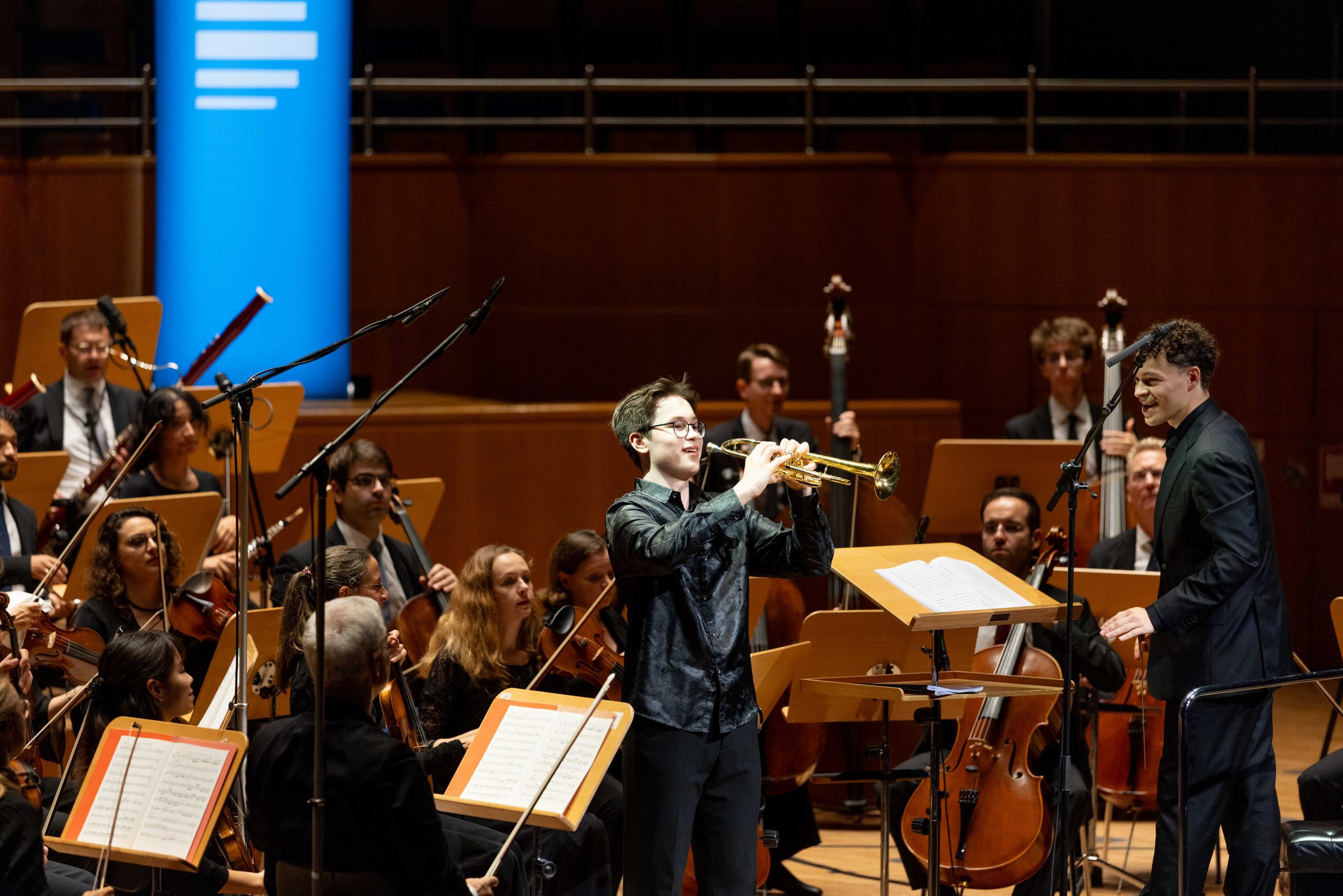
Creating a huge sensation, Ben Stümke, the youngest competitor at this year’s International Aeolus Competition for Wind Instruments, emerged as its biggest winner. The 15-year-old from Aachen took the €20,000 first prize, the €2,000 Audience Award and the €7,000 Special Prize for the Best Interpretation of Contemporary Music. Stümke performed Oskar Böhme’s Trumpet Concerto as well as a contemporary work: Wolf Kerschek’s A Stranger’s Passage.

Second prize went to London-based trombonist Sophie Bright, born in 2004, while Hannover-based tubist Byoungho Kang, born in 2003, received the third prize.

Each year, the competition focuses on three specific instrument categories, providing a significant stage for performers aged 28 and younger. The 2026 edition highlighted the trumpet, trombone, and tuba, drawing 78 participants—32 trumpet, 31 trombone, and 15 tuba contestants—to the Robert Schumann Hochschule. Initiated by Sieghardt Rometsch, the event continues to be a vital platform for artistic development, culminating in a final concert at the Tonhalle, where finalists performed alongside the Düsseldorf Symphony Orchestra. 

The 2027 edition of the competition will turn its focus to the bassoon, clarinet, and oboe.

Ben Stümke (Trumpet), First Prize Based in Aachen, Stümke is a young musician who has studied at both the Folkwang University of the Arts in Essen and the Robert Schumann Hochschule in Düsseldorf. He is a member of the Federal Youth Orchestra and has secured several accolades, including the NRW Youth Chamber Music Award and the Folkwang Brass Competition. In addition to the first prize, he received the Audience Award and the Special Prize for the Best Interpretation of Contemporary Music.

Sophie Bright (Trombone), Second Prize Currently residing in London, Bright is completing her Master’s studies at the Royal Academy of Music, following her training in Bern. She has received support from the ABRSM Scholarship and awards from various foundations, including the Lyra Stiftung and Fritz-Gerber-Stiftung.

Byoungho Kang (Tuba), Third Prize Residing in Hannover, where he currently pursues his studies at the Hochschule für Musik, Theater und Medien, Kang began his musical path through specialized training programs. His portfolio of achievements includes honors from the Markneukirchen International Instrumental Competition, the Jeju International Brass Competition, and several others.

Byoungho Kang, Sophie Bright and Ben Stümke ©Susanne Diesner

Awards

First Prize: Ben Stümke, Trumpet (15), Aachen

Second Prize: Sophie Bright, Trombone (21), London

Third Prize: Byoungho Kang, Tuba (23), Hannover

Jury

Florian Csizmadia (Chair), Ian Leslie Bousfield, Mireia Farrés Bosch, Hannes Läubin, Katy Jones, Prof. Thomas Leander, Alexander von Puttkamer, Lee Tsarmaklis

Artists

Düsseldorfer Symphoniker/ Kyrian Friedenberg, Conductor
07.10.25 | World Federation of International Music Competitions

The Aeolus at Twenty: A Conversation with Sieghardt Rometsch

For two decades, the International Aeolus Competition for Wind Instruments in Düsseldorf has stood as a bastion for emerging talent.

Founded by Sieghardt Rometsch, the competition has carved out a unique niche in the musical landscape, focusing exclusively on the diverse world of wind instruments. We sat down with Mr. Rometsch to discuss the vision behind this remarkable endeavor, the challenges of fostering young talent, and the enduring impact the competition has had on the global stage.

WFIMC: Mr. Rometsch, your transition from a career in finance to becoming a pillar of the music world is unusual. What inspired you to launch the Aeolus Competition in 2006?

Sieghardt Rometsch: It was a matter of looking for a meaningful purpose after my retirement. I didn’t want to spend my days on golf courses or cruises. Music had always been the most significant passion of my life. I consulted with various luminaries—rectors of music academies, figures from the ARD Competition—and they agreed that a specialized competition would fill a real void.

Looking at the landscape at the time, there were dozens of piano and violin competitions, but very few dedicated to wind instruments. As a man of business, I saw a niche. I founded a foundation to support talented young musicians, a way of giving back for the fortunate circumstances of my own life.

How did you build such a world-class institution from scratch?

The beginning was not straightforward. I assembled a group of advisers, but I chose the wrong people, and that did not work out. The decisive encounter happened in Dresden, where a clarinet quartet from a specialist music school performed at a foundation meeting. Afterwards, I asked the young players whether they all hoped to study with Sabine Meyer. They said, “No, we want to study with Ralf Manno.”

I did not know him, but fortunately he was a professor in Cologne, so I invited him to lunch. At first, he told me he would not become involved. We nevertheless had a very good conversation, and by the end he said, “When I see that you are doing all this with your own private resources, I think it is such a wonderful initiative that I will help you.” That was a Monday. By Friday, we had Dag Jensen for bassoon, Sharon Kam for clarinet, Daniel Gauthier for saxophone, and Manno himself. Within four days, we had a world-class jury. I learned early on that success in this field is very much about knowing who to call. Crucially, I sought the partnership of the Düsseldorfer Symphoniker and the Robert Schumann Hochschule. They became—and remain—the true home of the competition. By anchoring the competition within a premier educational institution, we ensured both artistic integrity and structural stability.

WFIMC: Why was the partnership with Düsseldorf’s musical institutions so important?

I first approached the Tonhalle, where I was already known through my involvement with its supporters’ society. They were willing to participate with the Düsseldorfer Symphoniker. Then I approached the Robert Schumann Hochschule, which agreed to become the competition’s home. It remains its home today. I organise and finance the competition, but the Hochschule provides the institutional foundation behind it.

From the beginning, I also arranged for Düsseldorf’s head of cultural affairs and the rector of the Hochschule to serve on my foundation’s board by virtue of their offices. That embedded two important cultural institutions in its structure.

Individuals can initiate things, but institutions provide continuity. In music, of course, exceptional personalities can have enormous influence. Yet if you want to build something durable, you need a structure that does not depend on one person alone.

WFIMC: Aeolus covers nine instruments, with each returning every three years. What was the thinking behind that cycle?

The ARD Competition was a major model for me. I studied in Munich and attended it as a student in 1960 and 1961. But a particular wind instrument might appear there only once every five or six years. A musician could potentially go through their studies without having the opportunity to enter. We wanted to offer something more frequent: nine instruments, with three featured each year, so that every instrument returns after three years.

That means a young musician can come at 17, return at 20, and perhaps win at 23. We have seen that kind of development. The flautist Matvey Demin is an example of someone who returned as he progressed.

For the participants, knowing that another opportunity will come within three years is important. They can measure themselves against an international field, continue developing, and come back. The competition becomes more than a single, unrepeatable chance.

WFIMC: What did the early editions teach you about looking after the musicians properly?

One very practical lesson concerned the pianists accompanying the competitors. Initially, there was an assumption that a music academy with so many excellent pianists and professors would have no difficulty providing accompaniment. But being an excellent pianist does not automatically mean being equally familiar with the repertoire of every wind instrument. Accompanists also specialise. Someone experienced in clarinet repertoire may not have the same familiarity with trombone or tuba repertoire.

We encountered considerable difficulties in the first competition and learned from them. Afterwards, we began engaging accompanists who worked with members of the jury and knew the relevant repertoire.

Another challenge was the requirement to perform from memory in the prizewinners’ concert. Some excellent competitors had prepared the competition repertoire thoroughly but were less secure when it came to playing that final work from memory. We subsequently introduced written confirmation at the third-round stage that participants could meet the requirement. Organising a competition means learning from such experiences and making the expectations clearer. 

WFIMC: When the jury listens, what matters most?

Our first criterion is artistic personality. Then comes the quality of interpretation, followed by technical proficiency.

That order is important. We want to recognise the musician, not simply the instrumental facility. One thing that surprised me through conversations with other competitions was that some had no explicitly formulated assessment criteria. For us, it is important to articulate what we are looking for. The same applies to the repertoire. A demanding programme establishes the level of the competition. It encourages applications from musicians who have already reached a certain stage of preparation and are ready for the challenge.

WFIMC: What role has the World Federation played in the competition’s development?

It began very practically. Ralf Manno told me that when he encouraged his students to enter Aeolus, they asked whether it belonged to the World Federation. That showed me how much membership mattered to young musicians.

The annual meetings then became enormously valuable opportunities to learn. The world of competitions was new to me, and suddenly I could discuss its central questions with people who had years of experience.

How should applications be assessed? What are the advantages and disadvantages of audio or video selection? How do differences in recording equipment affect fairness? What voting system should a jury use?

These are not abstract issues. You return home with concrete ideas to discuss and, where appropriate, try out.

Just as the young musicians want to improve, we should want to become better at organising competitions. The meetings encourage you to question established practices rather than assume that the way you have always done something must be the best.

Reflecting on 20 years, how has the competition evolved, and how has it influenced the careers of its participants?

Technologically, the shift has been immense—from mailing physical dossiers to the digital-first world of today. But artistically, the core remains the same: discovery. We are a platform where industry professionals listen carefully. For those who participate, it is often the foundation for a professional career.

We take great pride in seeing our alumni secure positions in the world’s finest ensembles. Just consider a few examples: Matthias Schorn, a laureate from our inaugural 2006 competition, is now the solo clarinetist with the Vienna Philharmonic. Jonathan Ramsay, from the 2019 cohort, plays with the Berlin Philharmonic, while Polina Tarasenko (2023) holds a position with the Gewandhausorchester Leipzig. We’ve seen winners like Matvey Demin join the SWR Symphony Orchestra and Andrea Cellacchi become part of the Royal Concertgebouw Orchestra.

What is your vision for the future of the Aeolus Competition?

That is a question I ponder, especially given my age. The goal is sustainability. The foundation is designed to be operatively active, and our board is composed of individuals from both the musical and economic spheres to ensure the competition remains well-managed and financially secure. As one of our esteemed jurors, Ian Bousfield, recently remarked, we have the privilege of witnessing the start of truly brilliant careers. That privilege is what we aim to preserve for the next generation of wind players.

About the Aeolus Competition

Founded in 2006, the Aeolus International Competition for Wind Instruments takes place annually in Düsseldorf, Germany. It serves as a vital platform for young wind soloists (flute, oboe, clarinet, bassoon, saxophone, horn, trumpet, trombone, and tuba) to launch international careers. The competition is held at and in partnership with the Robert Schumann Hochschule Düsseldorf and the Düsseldorfer Symphoniker.


© WFIMC 2026 / FR


Aeolus 2025 Celebrates Excellence in Wind Performance Competitions

30 September 2025

The International Aeolus Competition for Wind Instruments concluded its 2025 edition,

reaffirming its status as a global platform for emerging wind talent. This year’s focus on horn, oboe, and saxophone attracted 102 musicians from 32 countries.

The prestigious first prize and a €20,000 award were claimed by saxophonist Dimitri Pinchuk. The 20-year-old musician, who studies in Moscow under Professor Nikita Zimin, has already built an impressive resume with previous first-prize wins at the 2023 Adolphe Sax Competition and the 2024 Andorra international Saxophone Competition.

The second prize, accompanied by €15,000, was awarded to oboist Alexander Kronbichler. Hailing from South Tyrol, the 22-year-old is currently a student of Professor Ralph van Daal at Düsseldorf’s own Robert Schumann Hochschule.

Completing the top trio was hornist Jin Zhicheng from Beijing. The 19-year-old, who studies at the Central Conservatory of Music, was awarded the third prize of €10,000. In a testament to his compelling stage presence, Zhicheng was also honoured with the Audience Prize, an additional €2,000 award. His recent achievements include a first prize at the 75th Prague Spring International Music Competition in 2024.


The competition culminated on September 14th with the grand prize-winners‘ concert at the Tonhalle Düsseldorf. The finalists performed with the Düsseldorfer Symphoniker, led by conductor Euan Shields. The programme showcased a diverse repertoire: Alexander Kronbichler performed Richard Strauss’s Concerto for Oboe and Small Orchestra, Dimitri Pinchuk captivated the jury with Henri Tomasi’s Saxophone Concerto, and Jin Zhicheng

presented Carl Maria von Weber’s Concertino op. 45 for Horn and Orchestra.

A special highlight was the recognition of 15-year-old Chinese oboist Guo Yu, who received a special prize for the best interpretation of contemporary music. He won over the jury with his own composition, Shan Li – The Dual Paths of Benevolence and Propriety for oboe.


Organised by the Sieghardt Rometsch Foundation and hosted annually since 2006 at the Robert Schumann Hochschule, the Aeolus Competition is one of the very few international competitions offering brass and wind instrument categories. The 2025 jury comprised esteemed professors and performers such as Szabolcs Zempléni and Ricardo Lopes.


Laureates:

First Prize: Dimitri Pinchuk, Saxophone

Second Prize: Alexander Kronbichler, Oboe

Third Prize: Jin Zhicheng, Horn


Jury:

Georg Fritzsch (Chair), Katy Woolley, Szabolcs Zempléni, Ricardo Lopes, Viola Wilmsen, Vincent David, Kayle Horch, Thomas Leander


Artists:

Düsseldorf Symphony Orchestra/ Euan Shields, conductor

©WFIMC 2025


07.10.25 | World Federation of International Music Competitions

„Outstanding winners in Düsseldorf“

Holzbläser glänzen bei einer beispielhaften Aeolus-Ausgabe 2024

Der 17-jährige Flötist Fabian Johannes Egger, geboren 2007 in Traunstein bei München, konnte im Finale des Aeolus-Wettbewerbs 2024 alle drei möglichen Preise gewinnen: den Jurypreis, den Preis für die beste Interpretation eines zeitgenössischen Werkes und schließlich den Publikumspreis.

Der 17-Jährige entlockte dem Konzert für Flöte und Orchester des dänischen Komponisten Carl Nielsen eine ungewöhnlich große Bandbreite an Nuancen. Sein Spiel wirkte frei, als sei alles improvisiert. Eine solch lockere Art ist bei Musikwettbewerben selten. Das eröffnende Allegro moderato gestaltete er wie eine sehr erregte Rede und ließ rhythmisch markante Passagen fast perkussiv erscheinen. Im Allegretto un poco fand er einen Ton, als wolle er Tiere anlocken, und die technischen Hürden des Konzerts meisterte er so souverän, dass sie fast nebensächlich erschienen.

Das zeitgenössische Stück (für das er den Sonderpreis erhielt) komponierte er selbst. „Leben ist nicht genug!“ heißt die Komposition. Wirbelnde Girlanden, starke rhythmische Akzente und zarte Momente verbinden sich zu einer mitreißenden Darbietung.

Aber auch die beiden anderen Finalisten lieferten hervorragende Leistungen ab. Der 27-jährige Klarinettist Victor Díaz Guerra, Gewinner des Nielsen-Wettbewerbs 2019 und derzeit Soloklarinettist des Orquesta de la Comunidad de Madrid, gewann den zweiten Preis mit einer technisch brillanten Darbietung von Carl Maria von Webers zweitem Klarinettenkonzert. Mit einem robusten, silbrigen Klang gab er dem Solopart eine sehr klare Struktur und interpretierte ihn eher klassisch streng als romantisch. Selbst im langsamen Mittelsatz blieb der Ausdruck der Gefühle dezent.

Der dritte Preis ging an die Fagottistin Minju Kim (28), frühere Gewinnerin des Prager Frühlingswettbewerbs und Solofagottistin der Hamburger Philharmoniker. Das spätklassische Concertino in B-Dur des finnischen Komponisten Bernhard Crusell klingt so fröhlich wie ein Morgenspaziergang. Doch die unzähligen Triller, Läufe und Arpeggien machen das Solo zu einem harten Training. Kim meisterte die hohen Anforderungen mit Geschick, aber nicht ohne Anspannung.

Begleitet wurden die Finalisten erneut von den Düsseldorfer Symphonikern, diesmal unter der Leitung von Katharina Müllner, die ab dieser Spielzeit als Kapellmeisterin an der Deutschen Oper am Rhein tätig sein wird. Ihr klarer Dirigierstil mit präziser Gestik sorgte für einen festen orchestralen Rahmen, in dem sich die Solisten frei entfalten konnten.

Preis:

1. Preis: Fabian Johannes Egger, Querflöte (17), Traunstein, Deutschland

2. Preis: Victor Díaz Guerra, Klarinette (28), Madrid

3. Preis: Minju Kim, Fagott (28), Zürich

Jury:

Mark Rohde (Vorsitz), Yehuda Gilad, Amy Harman, Kilian Herold, Dag Jensen, Prof. Thomas Leander, Andrea Lieberknecht, Gaby Pas-van Riet

Künstler:

Düsseldorfer Symphoniker

©2024 WFIMC/FR

James Vaughen gewinnt Aeolus-Wettbewerb 
 

Der mit 20.000 Euro dotierte erste Preis des 17. Internationalen Aeolus Wettbewerbs ging am Sonntagmittag an James Vaughen. Der 24jährige Trompeter aus den USA studiert am Curtis Institute of Music bei Prof. David Bilger. Im Preisträgerkonzert in der Tonhalle Düsseldorf mit den Düsseldorfer Symphonikern konnte er die achtköpfige Jury unter der Leitung von Hendrik Vestmann überzeugen. Vaughens berufliche Laufbahn umfasst schon jetzt Positionen als stellvertretender Solotrompeter beim Grant Mark Music Festival und beim Philadelphia Orchestra.

Der zweite Preis in Höhe von 15.000 Euro ging an Xianhua Liu. Der 24jährigeTubist aus China studiert an der Hochschule für Musik in Hannover bei Prof. Jens Björn Larsen. Er erhielt bereits zahlreiche Auszeichnungen, darunter den dritten Platz beim 57. Instrumentalwettbewerb in Markneukirchen 2022. Er konnte wertvolle Erfahrungen in namhaften Orchestern wie der Staatsoper Hamburg, den Berliner Philharmonikern und der NDR Radiophilharmonie sammeln.

Mit dem dritten Preis wurde Polina Tarasenko geehrt. Die 22jährige ukrainische Posaunistin studierte an der Gnesin Special Music School in Moskau und spezialisierte sich auf die klassische Posaune. Nach ihrem Bachelor-Studium bei Prof. Jonas Bylund begann sie 2022 ihren Master in Musikperformance an der HKB Bern University of the Arts bei Prof. Ian Bousfield.

Den Sonderpreis für die beste Interpretation eines zeitgenössischen Stückes erhielt Sophie Bright. Die 18jährige Schweizerin studiert an der Hochschule der Künste Bern bei Ian Bousfield. Nebenbei ist sie als erste Posaune im Jugend Sinfonie Orchester Bern tätig und gehört dem Swing-Jazz-Sextett Coniglio Connection als Soloposaunistin an.

Der Internationale Aeolus Bläserwettbewerb zählt zu den angesehensten Musikwettbewerben der Welt und wird für die Instrumente Flöte, Oboe, Klarinette, Fagott, Saxophon, Trompete, Horn, Posaune und Tuba ausgeschrieben. Er findet seit 2006 einmal im Jahr in Düsseldorf statt.

Der Aeolus Wettbewerb ist offen für junge Musiker aller Nationalitäten, die jünger als 28 Jahre sind. Jedes Jahr werden drei der Instrumentengruppen zum Wettbewerb ausgeschrieben: 2023 waren es Posaune, Trompete und Tuba. Das Preisgeld beträgt insgesamt 60.000 Euro, der erste Preis ist mit 20.000 Euro dotiert.

Das Foto zeigt die Gewinner des Wettbewerbs mit Prof. Thomas Leander, Rektor der Robert Schumann Hochschule, der den Wettbewerb mit seiner Hochschule maßgeblich begleitete.

Foto: Susanne Diesner

Presse

Prof. Reinhold Friedrich über den Aeolus Wettbewerb

„…It has gained a great importance in the music scene, it´s quite a phenomenon. It is really THE competition for wind players. We don´t really have many others: there is Munich, there is Marktneukirchen. Some years ago, there was Geneva. But today, Aeolus is really a first address for Brass and Wind players. I would not know which competition to put on the same level.“

©WFIMC 2023/FR

>hier finden Sie das volle Interview

Eine Klarinette zum Verlieben

Von Lars Wallerang

Außergewöhnlich hoch war das musikalische Niveau beim Finale des internationalen Aeolus-Bläserwettbewerbs, das traditionsgemäß mit Begleitung durch die Düsseldorfer Symphoniker in der Tonhalle ausgetragen wurde. Die drei unter Leitung von Vitali Alekseenok orchestral wie auf Händen getragenen Finalisten spielten technisch perfekt, fehlerfrei und mit geradezu sprechendem Ton.

© 2022, Rheinische Post, 11.09.2022


„Es war mal wieder ein heimliches Meiterkonzert – das Fomal des Aeolus-Wettbewerbs in der gutbesuchten Tonhalle…

… Die Symphoniker unter Jung-Kapellmeister Vitalii Alekseenok begleiteten die deri Finalisten in zwei bekannten Solo-Konzerten von Mozart un in einem „Poème“ von Pierre Philippe Bauzin. Die drei Finalisten (von etwa 240 angemeldeten Kandidaten) bewiesen ausgereiftes technisches Können…“


von Michael-Georg Müller
NRZ
12. September 2022

„….mit dem Aeolus Wettbewerb ist es gelungen die Stadt Düsseldorf mit einem musikalischen Ereignis von Weltrang zu beglücken und ihn von Beginn an in der internationalen Spitze im Wettbewerbszirkus zu platzieren.

Den Preisträgern stehen nach dem Erfolg in Düsseldorf die Türen der großen Orchester offen, das kann als sicher gelten.“


das Orchester
Magazin für Musiker und Management
Dezember 2018

17-Jähriger gewinnt bei Aeolus

Hornis Bora Demir setzt sich beim Bläserwettbewerb in der Tonhalle durch

Von Lars Wallerang

Im Finale des Aeolus-Bläserwettbewerbs kommt es einmal mehr zum Kopf-an-Kopf-Rennen hochtalentierter Musiker. Die drei Finalisten haben sich während zweier Vorrunden an ihren Instrumenten (Fagott, Horn und Oboe) für eine Endrunde mit Orchesterbegleitung in der Tonhalle qualifiziert. Aber nur einer von ihnen kann den Sieg davontragen. Gewinner des Ersten Preises ist letztlich ein Teenager, der 17-Jährige Türke Bora Demir, der am Konservatorium Istanbul Horn studiert und in seiner Heimat schon mehrere Auszeichnungen erhielt. Eine kleine Sensation ist nicht nur das jugendliche Alter des Hornisten, der sich gegen gestandene Musiker durchsetzte, sondern die auffallende Perfektion seines Spiels. Das Horn gilt als eines der technisch schwierigsten Instrumente überhaupt, aufgrund der schier unendlichen Tücken beim Treffen sauberer Töne auch liebevoll „Glücksspirale“ genannt. Bora Demir spielte nun, begleitet von den Düsseldorfer Symphonikern unter Leitung von Hossein Pishkar das 1. Hornkonzert Es-Dur von Richard Strauss mit einem wunderbar reinen Klang. Diese Klarheit der Tongebung hat in der Welt des Hornspiels Seltenheitswert.
Ja, das erinnerte bereits an die legendäre Aufnahme des Konzerts mit dem Briten Dennis Brain aus den 50er Jahren. Kein Wunder, dass die Jury Bora Demir den mit 10.000 Euro dotierten ersten Preis verlieh.
Das Niveau erwies sich als insgesamt sehr hoch. Auch der Zweitplatzierte, der Fagottist Marceau Lefèvre (23), musizierte ohne Fehl und Tadel. Im Fagottkonzert Carl Maria von Webers stellte er neben technischer Versiertheit auch Sinn für lyrische und humorige Passagen des frühromantischen Werkes unter Beweis. Dotiert ist der zweite Platz mit 7000 Euro.
Den dritten Preis (6000 Euro) gewann der französische Oboist Ilyes Boufadden- Adloff für sein virtuoses Spiel in Richard Strauss’ spätem Konzert für Oboe und kleines Orchester D-Dur, entstanden kurz nach Kriegsende 1945. Die Brillanz der Girlanden und die akzentuierte Spielweise hat vor allem das Publikum in der Tonhalle hingerissen. Der 23-Jährige erhielt dadurch zusätzlich den mit 2000 Euro dotierten Publikumspreis. Für die besten Interpretation zeitgenössischer Musik zeichnete die Fach-
Jury den schweizerischen Hornisten Pascal Deuber (25) mit einem Sonderpreis (5000 Euro) aus. Deuber spielte eine sehr facettenreiche Horn-Etüde des vor allem als Dirigent bekannten Finnen Esa-Pekka Salonen (geb. 1958).

© 2018, Rheinische Post, 24.09.2018

Presse zum Aeolus Bläserwettbewerb


„Der Aeolus Bläserwettbewerb zählt mittlerweile zu den angesehensten Musikwettbewerben der Welt. Der Aeolus Wettbewerb ist mittlerweile für die Bläser in der ganzen Welt das, was der Tschaikowski oder Chopin für Pianisten ist: Die Spitze.“

Rheinische Post, 19./20. August 2017


„Blech- und Holzbläser auf Höchstniveau. Meisterhafte Konzerte beim Internationalen Aeolus Bläserwettbewerb.“

NRZ, 18. September 2017


„Das einzige Musikereignis der Landeshauptstadt, das weltweit einen Ruf genießt, ist der Aeolus Wettbewerb für Blech- und Holzbläser.“

WAZ, 7. September 2017


„The International Aeolus Competition for Wind Instruments has firmly established itself as a worldwide recognized stage for wind Instrument players.“

Annual Book 2017, World Federation of International Music Competitions


„Sometimes the stress and disappointments in competitions also effect the judges of the competition. This was absolutely not the case at the Aeolus Competition in Düsseldorf; although not all the judges agreed with the results, which were very close, all finished the week only with deepest respect for each other.“

„Roger Bobo’s Blog“ (Brass – Legend), October 25th 2016


„Dieser Wettbewerb ist der renommierteste in ganz Europa, vielleicht sogar der Welt. Vergleichbar wohl mit einer Fußballweltmeisterschaft. Und ich bin sehr stolz dabei sein zu dürfen“

Fedor Shagov, Tuba, Moskau, Rheinische Post vom 16. September 2016


„Besser geht es nicht! Schaut man sich die Liste der bisherigen Preisträger an, was aus ihnen wurde, so lautet das schöne Fazit: Besser geht es nicht. Nahezu alle, die beim Aeolus-Wettbewerb für Blech- und Holzbläser in Düsseldorf bisher gut abgeschnitten haben, sind längst in exponierten Berufspositionen untergekommen.“

Das Orchester, Dezember 2016


„Im Olympiadorf der Bläser: Es ist ein eigener Kosmos, in den die Zuhörer des durchgängig öffentlichen Wettbewerbs eintauchen können. Höchste Konzentration liegt in der Luft. Aber auch eine freundschaftliche Kollegialität, eine Art entspannter Grundkonsenz. So muss die Stimmung in einem olympischen Dorf sein.“

Fono Forum, Februar 2017


Die Basis einer Weltkarriere: „Die Qualität der Jurymitglieder bietet den Teilnehmern den Vorteil, Kontakte zu knüpfen und von den Juroren weiterempfohlen zu werden. Der reiche Erfahrungsschatz aus einem solchen Wettbewerb ist eine solide und standfeste Grundlage für eine weltweite musikalische Karriere. Die Teilnahme am Aeolus-Bläserwettbewerb ist allen jungen Musikern zu empfehlen.“

Sonic Ausgabe 6, Nov./Dez. 2016

Beim 12. Internationalen Aeolus Bläserwettbewerb gab es diesmal keinen ersten Preis. Dafür vergab die achtköpfige Jury nach dem Preisträgerkonzert in der Tonhalle Düsseldorf zwei zweite Plätze. Sie gingen an den französischen Saxophonisten Eudes Bernstein (2.v.l.) und an den Russen Matvey Demin (l.). Der 24jahrige Flötist gewann auch den Publikumspreis.

Demin ist bereits seit drei Jahren stellvertretender Solo-Flötist im Orchester der Tonhalle Zürich und studierte zuletzt bei Prof. Andrea Lieberknecht in München. Der zweite Preisträger, Eudes Bernstein, ist 23 Jahre alt und studiert noch bei Prof. Claude Delangle in Paris.

Der dritte Preis des Aeolus-Wettbewerbs ging an den Klarinettisten Christoph Schneider (2.v.r.). Der 28jährige ist seit letztem Jahr Erster Soloklarinettist bei den Duisburger Philharmonikern. Schneider, der zuletzt bei Prof. Ralph Manno in Köln studiert hat, gewann auch den Sonderpreis für die beste Interpretation zeitgenössischer Musik.

103 Flötisten, 86 Klarinettisten und 74 Saxophonisten hatten sich diesmal für den 12. Internationalen Aeolus Bläserwettbewerb angemeldet. Es ging um 30.000 Euro Preisgeld und lukrative Konzertauftritte. Der Wettstreit dauerte fünf Tage und umfasst vier Runden. Beim Finale am Sonntag spielten die drei besten Musiker als Solisten in einem Konzert mit den Düsseldorfer Symphonikern unter der Leitung von Martin Fratz. 

Der Aeolus-Bläserwettbewerb wird von der Sieghardt-Rometsch-Stiftung in den Räumen der Robert Schumann Hochschule veranstaltet. Instrumente und Juroren wechseln jedes Jahr. In der Jury saßen diesmal Emily Beynon, Henrik Wiese, Harri Mäki, Thorsten Johanns, Alain Crepin, Claude Delangle und Raimund Wippermann, Rektor der Robert Schumann Hochschule. Den Vorsitz hatte der Kanadier Charles Olivieri-Munroe, Generalmusikdirektor der Philharmonie Südwestfalen.

Aeolus 2016
Zum ersten Mal in der Geschichte des Internationalen Aeolus Bläserwettbewerbs hat eine Frau den ersten Preis gewonnen. Das Foto zeigt (von links nach rechts) Constantin Hartwig, Roeland Henkens, Louise Pollock, Prof. Raimund Wippermann, Rektor der Robert Schumann Hochschule, und Lionel Jaquerod, Foto:Susanne Diesner.

≡ Druckversion (1,4 MB)